Friday, April 17, 2015

Chaplin Review


My wife recently began working on a presentation for grad school and she had to pick a subject to do it on, a breakdown of how a psychological theory would apply to a specific person. She picked Charlie Chaplin, a sublime choice because while the world giggled at the comedic follies of The Tramp, there was a darkness and lack of morality in play behind the scenes. Chaplin was one of the most gifted entertainers in the history of film and yet many of the laughs were derived because of pain.

Many of the stories Chaplin told were autobiographical in some ways, and learning about him on a deeper level was a welcome experience to allow me to appreciate his work even more as an artist. Thus it felt like a good time to finally see the 1992 film Chaplin by Richard Attenborough, a movie that at times soars thanks to the inspired performance from Robert Downey Jr. as Charlie Chaplin, but it still manages to fall victim to those pesky biopic tropes that bother me so.


A certainly fascinating journey, to see some of the experiences that haunted Chaplin's personal life acted out but I actually found that Chaplin as a whole played it pretty safe. Sure, it painted a picture of a very flawed man, but the strokes of Attenborough's brush still could have went bolder and portrayed more of the depth of his issues. I also didn't really care for the storytelling choice to have it be told during an interview with an elder Chaplin recounting the stories of his young and rise to fame. I actually would have preferred if it would have been played straight and traditional, just tell the story without utilization any narration.


I would use the word nice to describe Chaplin, which is both a compliment and a complaint. I would recommend this film to anyone curious to learn the basics about what made the man so complicated and Downey Jr. is excellent in the lead role, but at the end of the day Attenborough used a whole lot of words and still didn't come close to the nuance and power crafted by the real Chaplin in silence.


3/5


Thursday, April 16, 2015

Decades of Cinema - 10 Best of the 1960's


Previous lists are the 1920's, 1930's, 1940's and the 1950's. Here we have my ten favorite films from the 1960's.


10. The Apartment


Thanks to the Katherine Heigl's and Gerard Butler's of the world, the words "romantic comedy" have gotten a bad name. Here's the thing though: a good film is a good film, regardless of genre, and there have been a lot of terrific rom com pictures over the years. The Apartment by Billy Wilder is one of the all time greats. 


9. Winter Light


I find it ironic that I am always drawn in by pictures filled with religious themes and those that frequently feature religious imagery because in reality such things have little to no meaning in my life. I may not go to church, well, ever, but I will certainly attend a sermon directed by Ingmar Bergman. Winter Light is a truly special film that follows the pastor of a church as he searches for answers from a silent God. 


8. Persona


Oh, that Ingmar Bergman guy? Was I just talking about him? Well how about that, here we are again with one of his masterful works, this time the psychological mind fuck known as Persona. When I saw this film, I had no idea what I was watching unfold, but I didn't care. I knew what I was seeing was brilliantly crafted and the definition of memorable.


7. Night of the Living Dead


The ultimate zombie film from none other than the master himself, George A. Romero. Night of the Living Dead has so much more going on than just the walking dead. It is easy to ignore these days and treat as inconsequential, but this is a horror film released in 1968 and the lead role was a black male who bossed around the white people. Think about that for a second. Think about how controversial it must have been to see at the time.

On a much simpler level, this is a brilliantly made classic and it's entertaining as hell.

"They're coming to get you, Barbara!"


6. Breathless


This film from Jean-Luc Godard can only be described in the most simplistic of terms, even though the picture itself is anything but: it's just so god damn cool. From the model himself in the vein of Bogart Michel to his hip and beautiful girlfriend Patricia, Breathless is one of the earliest and most influential movies from the French New Wave.


5. La Jetee


One of the finest films ever created and it clocks in at less than 30 minutes in length, La Jetee is short but utterly brilliant. Director Chris Marker takes us on a science fiction journey in an unconventional way by delivering a story not with a normal cinematic flow but as a slide show of images and a voice-over narration. La Jetee ended up being the work that influenced the creation of the movie 12 Monkeys, and while I love the Terry Gilliam picture, the original is the masterpiece for me.


4. Dr. Strangelove


The top four films from the 1960's will be a perfect representation of why I consider Stanley Kubrick to be quite possibly the greatest cinematic mind in history. While only two of the four films will be his, they represent just how much range he demonstrated as an auteur and here we have one of the all time most brilliant comedies ever made. Yet another example of Kubrick being extremely anti-war only instead of delivering these messages via Paths of Glory or Full Metal Jacket type narratives, he makes us laugh out loud early and often here.


3. Psycho


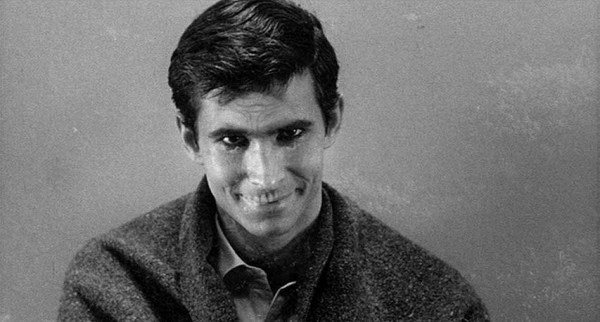
If you have been following my lists thus far, you have figured out by now that I am quite the fan of Hitchcock. Psycho is iconic and having the chance to see it on the big screen last year for the first time in my life was quite the experience. Also, is it just me or does Andrew Garfield look an awful lot like Anthony Perkins? Too bad they wasted a remake on Vince Vaughn.


2. Lawrence of Arabia


There was never another film like Lawrence of Arabia and there never will be again. It is a once in a lifetime miracle of cinema, a massive epic that, if it were made today, would demand a 300 million dollar budget and most of it would be wasted on special effects. Don't be fooled by the daunting length of this one and let that stop you from watching, Lawrence of Arabia is one of the smoothest and easiest films I have ever digested.


1. 2001: A Space Odyssey


A haunting monolith of cinema, 2001: A Space Odyssey is considered by many to be the greatest achievement in movie history and it is difficult for me to find a compelling reason to disagree. Stanley Kubrick does something mesmerizing and profound with the material by baffling us yet also inspiring his audience into believing that film can be an art form unlike any other. Personally, I think 2001 is a giant, amazing representation of the evolution of humanity, but hey, what the hell do I know?

The most important thing to remember when experiencing 2001 is to not get frustrated trying to analyze the details to death. That first time you see it, who cares what it is about? Just sit back, relax and enjoy the ride.


Next up, the 1970's. Oh boy the 1970's. I had to make some real tough choices and leave off some amazing films there. One that did make the cut is depicted above.


Star Wars: The Force Awakens Official Teaser #2


I have a seven year old daughter and she is excited to see a brand new Star Wars film with me. I can't express how happy this makes me.

The brand new trailer for Star Wars: The Force Awakens. Enjoy.


Wednesday, April 15, 2015

Iron Man 3 Review


After the misguided handling of Iron Man 2, not to mention coming off of the high of the nearly perfect execution of a superhero film with The Avengers a year earlier, I was excited that the reigns of the franchise were handed off to a new voice in Shane Black. I can't say for sure whether Jon Favreau was really to blame at all for the failings of the second installment but regardless, a new voice and vision was appreciated. I still recall the first time I saw the trailer for Iron Man 3 and a shockingly dark tone seemed to hang over every frame. I was so damn excited that the character was going to shy away from some of the ridiculous comedy and instead focus on the serious side of the saga of Tony Stark.

Well...almost. Things do indeed get serious with the exploration of what troubles a superhero could face when dealing with PTSD, and some breathtaking dramatic set pieces absolutely thrill in ways the franchise never had before. Damn it though, those villains. Both the strange twist involving the Mandarin and the Extremis folk. I just can't comprehend some of the villain choices in these Marvel films.


First let me clarify my issue with the Mandarin twist. It isn't the concept of the twist itself that bothers me, because I am all for keeping an audience on their toes and doing something unexpected. What troubles me is the sudden, jarring tonal shift that takes place, going for completely bad ass terrorist to...well, that. Jokes land with a thud instead of a laugh and I couldn't help but scratch my head at not so much the idea but the execution of it. After coasting with joy for much of the movie up until that point, the way the Mandarin character was handled was unfortunate and revisits haven't changed my opinion of this. I still don't get it.

What might be even worse than the way they handled that one specific character is what it meant for the big picture of the story. By pushing aside what was by far the best villain Iron Man had faced thus far in a solo effort, we are left with Guy Pierce and his glowing band of misfits, and frankly nothing about this crew is compelling in any way. From the opening scene that takes place in 1999 to the modern day handsome version, the character of Aldrich Killian did absolutely nothing for me throughout. Yet still the streak continued, as no solo film from the MCU had gotten the villain right yet. Someday though, right Captain America?

Still though, the overall completed picture is a massive upgrade from the previous film, with a far more likable and believable turn from Robert Downey Jr. as Tony Stark/Iron Man. In fact his performance in Iron Man 3 is the best of his work thus far in the universe, and with the assistance of flat out amazing sequences like the attack on his home and, of course, the Air Force One rescue, I can easily recommend Iron Man 3 as a pretty joyous blast of a picture.


I just wish it had a damn good villain like the trailer indicated. Without that misstep, this would have been up there competing for the best entry into the MCU to date.


3.5/5


Exit Review


It isn't that I expected a strong narrative from a 12 minute short, so I don't chalk this up to missed expectations. Before the first frame even hit the screen I anticipated the concept of style over substance would be very much in play in Exit, the new film by Rohit Shivdas, so I'm not here to stomp all him for that. Honestly, that wouldn't be fair.

What is fair game though is to question the various choices of music Rohit felt would fit the tone of this short. I don't know what it is about a 12 minute exercise in an aspiring filmmaker trying to better acclimate himself with the camera and trying to find himself and his potential style, but I don't want the rock outfit Imagine Dragons to be anywhere near it. During the opening credits, we see lyrics from the song literally spelled out for us on the screen and I felt as if I was watching an amateurish music video rather than the start of any sort of original vision. Instantly I felt a disconnect with what I had hoped for when I pressed play.

The performances were flawed, but that is to be expected, and I could quibble over the fact that the sound mix seemed to be a split second off from the mouths we see moving during the fleeting moments involving dialogue, but again I can forgive these issues because I would hardly expect perfection. Suddenly though, at almost exactly the 7 minute mark the very familiar track Nightcall by Kavinsky comes blaring through my speakers and we are greeted with a grand shot of a cityscape lit up at night, a sequence that seemed to go beyond being simply influenced by Refn but rather more like an attempt to flat out duplicate the magic of Drive. 

I don't watch short films from young filmmakers because I want cover songs. I watch them because I want a unique vision, I want to feel inspired by the passion seeping through the frames on the screen. Caring deeply about your work is far more appealing then familiarity, even when it misses the mark. By using songs by Grammy winners and those already utilized with perfection in cinematic masterpieces, all I do is relate what I am seeing to something much stronger that has been done before. 

Originality is crucial, and Exit desperately needs some.


1/5


(You can watch the film here)

Tuesday, April 14, 2015

Decades of Cinema - 10 Best of the 1950's


You can find my lists for the 1920's here, 1930's here, and 1940's here. It's time to cover the 1950's, a pretty incredible ten years of filmmaking.


10. Wild Strawberries


The brilliance of Ingmar Bergman can not be overstated. The man was a genius, and one of my favorite works of his is Wild Strawberries, a film that beautifully walks the line of real and surreal with grace and ease. This is without a doubt a far more accessible movie compared to some of his others, as we go on a journey with Isak Borg both in the literal and deeply personal sense as he drives a great distance and also reflects on his life and finds inner peace with himself along the way.


9. Ugetsu


Ugetsu is a tremendously beautiful, haunting ghost story that is celebrated for being one of the defining pieces from the Japanese Golden Age of Film. It is a mystical, magical fable that utilizes gorgeous cinematography to set an atmosphere that is impossible not to admire.


8. A Man Escaped


A man condemned to death in a Nazi prison camp in a then German-occupied France. Much of the film is spent inside the claustrophobic confines of a prison cell, and you can feel the walls closing in around him. The only way out is via escape and a plan is methodically put into place, and the tension is built brilliantly using sound and space. This Robert Bresson film is not only a masterclass in filmmaking on its own regard, but it has since been the inspiration for other major pictures including the Oscar winning Alfonso Cuaron picture Gravity. A Man Escaped is a must see.


7. Rashomon


A film that literally invented terminology referring to scenarios in which multiple eye witness accounts of a single event offer conflicting information. The Rashomon effect. This is a movie worthy of being described as spellbinding, as I cannot look away as I watch it. Rashomon is essentially perfect cinema on every possible level, yet it only ranks as my #7 of its decade. That's how great the 50's were.


6. 12 Angry Men


A sublime example of minimalism done right, 12 Angry Men almost entirely takes place in one room and yet the setting is probably more vital to the storytelling than any single character. A jury deliberates the fate of a man who has been charged with a murder, and the tension in the room is reflected by the climate outside. One of the finest examples of a film being carried by performances that I can think of.


5. The Night of the Hunter


In the review I wrote for Only God Forgives, I explain what is wrong with blindly following a site like Rotten Tomatoes or Metacritic without giving a movie a chance and making up your own mind. One of the biggest historical examples of thing is The Night of the Hunter, the only film ever directed by Charles Laughton. Why only one? Because it was panned critically out of the gate and was a commercial failure. Now you can't find an expansive list of the greatest films of all time without seeing The Night of the Hunter on it.


4. Paths of Glory


There have been a fair amount of hard hitting war films released since the dawn of the medium, but Paths of Glory is surely one of the greatest. One of a few examples of the genius Stanley Kubrick using his platform to artistically express his anti-war sentiments, the story here involves a group of soldiers who refuse to participate in an attack that is essentially suicide. Three of these men are chosen randomly to face a court-martial for cowardice. 

The first time I saw Paths of Glory, I was literally speechless when it ended. I then proceeded to immediately press play on the remote and watch the entire thing over again without even so much as standing up.


3. Rear Window


For the second straight list of my favorite films from a decade, Alfred Hitchcock will occupy two of the top three spots. Safe to say I am a fan, eh? The difference between the two sets of films is the 1940's variety, with Shadow of a Doubt and Rope, were two movies I had not even seen until relatively recently and I fell in love with as an adult. Here with Rear Window, the love is both due to the exquisite filmmaking and also the nostalgic feeling I get from seeing this so many times throughout my life. I cherished Rear Window nearly 20 years ago and I admire it even more today.


2. Singin' in the Rain


If I am ever even in a slightly dour mood, a little headache, a bad day at work, hell simply stubbing my toe would suffice, I can turn to Singin' in the Rain and everything will be just fine soon after I press play. I used to claim I hated musicals. I used to be an idiot. This is one of the great joys of cinema, a film that absolutely glows thanks to memorable musical numbers, amazing set pieces and tons of laughs. 


1. Vertigo


The best film of the 1950's is also one of my favorite of all time from any era. Vertigo sort of represents what cinematic perfection feels like for me because it was the first film I ever saw that made me understand what the word masterpiece meant. Not to mention the fact that when I lost my Vertigo virginity, I was a 14 year old boy so beautiful women were certainly in my wheelhouse. Probably explains why I was smiling like an idiot whenever Kim Novak was on the screen.


Next will be the 1960's, which will feature some of the finest films ever made.  


Only God Forgives Review


Why do we always need someone to root for?

One of the common complaints I have read regarding the brilliant Nicolas Winding Refn film Only God Forgives is that it lacks relatable, likable characters, which is such a strange thing to perceive as a flaw. What we are witnessing is an abstract, surreal world richly bathed in neon colors and unsettling imagery. It is nightmarish, a fever dream glimpse at the criminal underworld of Bangkok. It is meant to baffle, to anger, to linger in your mind long after you are done watching. Only God Forgives isn't a film that strives to fit in any traditional, Hollywood mold, one that demands a protagonist with a heartbreaking back story that charms his way into our souls. This is a story involving revenge but not one that asks us to stand up and cheer if the vengeance is eventually realized. 

Only God Forgives doesn't have a hero. Why does it need one?

If you are watching a film like this with the intention of falling in love with the characters as a way of connecting on an emotional level, you are watching it wrong. Refn doesn't give a shit how we feel, nor should he, at least not right away. His vision is profound not because of what we see or feel on the surface but rather because of the layers we need to peel back after multiple viewings to fully appreciate just how dense the narrative is. I don't blame anyone for believing that Only God Forgives "isn't about anything" after their first viewing, it is completely understandable to feel cold about a work seemingly so distant from anything close to a beating heart, but watch it again before you admonish it for being soulless or empty. Over the course of 90 minutes, our eyes will have drowned in the color red and our minds will be racing to search for meaning. Don't give up so quickly. Trust me, it's there.


The initial unflinching wave of critical backlash towards Only God Forgives was disheartening, but not because of the general concept of them not liking the film. Any one person is completely entitled to their opinion. No, the fact that we instantly turn to a aggregate score on a website as the end all, be all to judge a films success rather than decide for ourselves is unfortunate, especially for a movie that demands patience and an open mind to be appreciated. We live in such a small, cynical world where four minutes after the final frame has left the screen an onslaught of angry tweets have already swayed public opinion to head down a negative path. It's as if we as a cinema enthused society have decided having to actually work a little in a theater is a bad thing. Perhaps instead of instantly writing off art and being in a hurry to move on, we should take a second to let the craft of an auteur sink a little deeper into our subconscious. 

Perhaps we should stop always searching for heroes, for the "good guy" to come swooping in at the last second to save the innocent. Perhaps not every story deserves to end in a parade of joy as we celebrate the righteousness of the human spirit. Perhaps sometimes the best we should expect from a person is that they are able to recognize how they have sinned and accept their punishment for such transgressions. When Julian (Ryan Gosling) stares at his hands in Only God Forgives, it isn't the dull, meaningless moment that so many have made it out to be. Refn is showing us the culprits, the tools utilized by a man with a past that haunts him.


Julian is no hero, and we don't need to like him. Only a god could ever forgive.


5/5